
A whole home remodel revitalizes your living space by updating its layout, design, and functionality across every room. It’s a strategic investment that enhances comfort, increases property value, and adapts your home to your lifestyle, all without the hassle of moving.
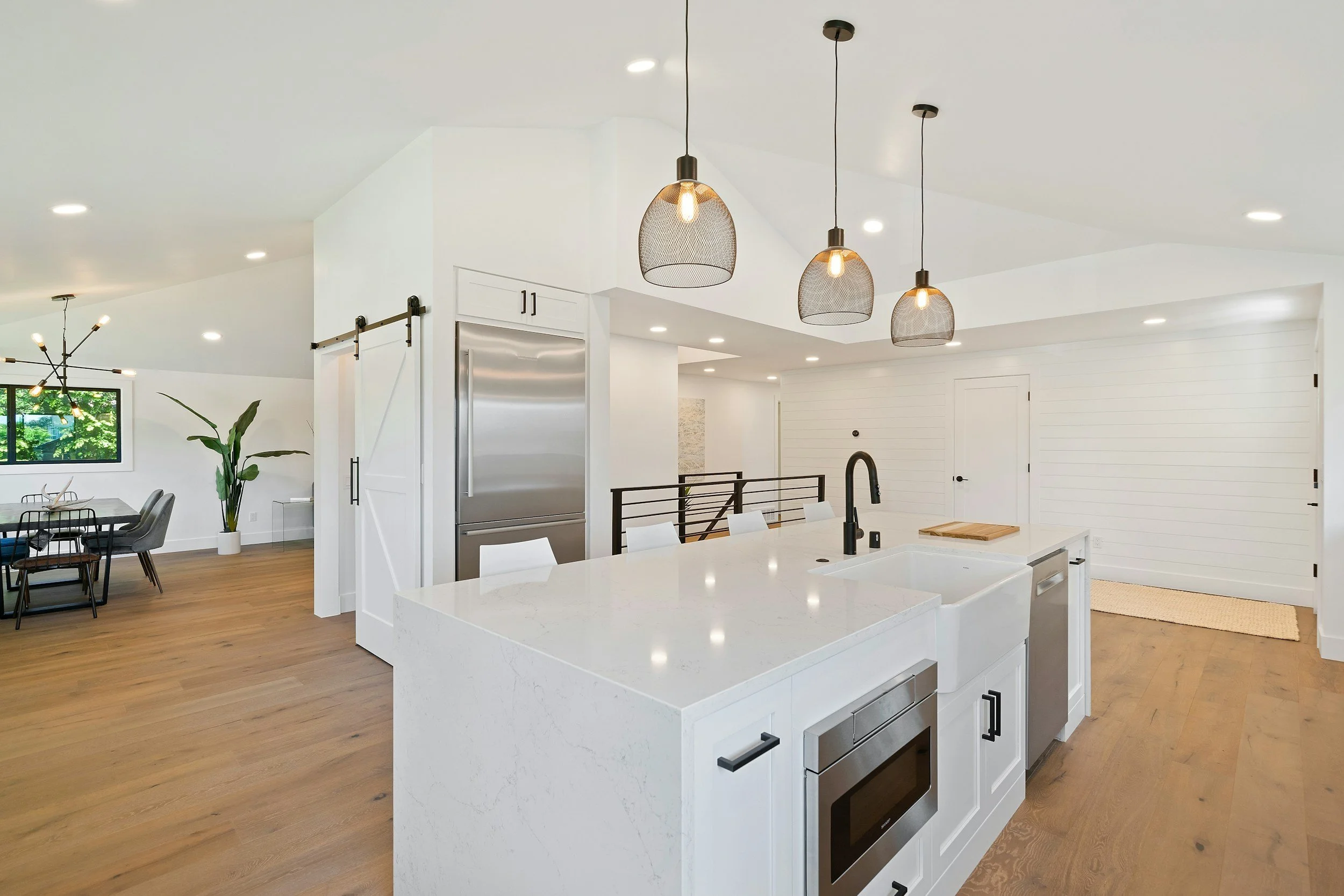
Table of Contents
Introduction
Your home tells your story, but over time, that story can feel outdated. Maybe the kitchen feels cramped, the bathrooms lack style, or your layout no longer fits your lifestyle. A whole home remodel offers a chance to rewrite that story, harmonizing aesthetics and functionality across every space.
This guide explores how a comprehensive remodel can breathe new life into your home. You’ll learn what it entails, how to plan effectively, and how to avoid costly mistakes. Whether you’re modernizing an aging property or tailoring your forever home, this article gives you a roadmap to transform your vision into a lasting reality.
What Is a Whole Home Remodel?
A whole home remodel is a comprehensive renovation that transforms multiple (or all) areas of your home. Unlike isolated updates, like redoing a kitchen or bathroom, a whole home remodel ensures a cohesive design and functional flow throughout the entire property.
It may include:
Redesigning layouts for better space efficiency
Updating electrical, plumbing, and HVAC systems
Installing new flooring, lighting, or cabinetry
Opening up walls to create open-concept living
Enhancing energy efficiency with new windows or insulation
Key benefit: You get a home that looks new, feels cohesive, and meets your modern needs, all while maintaining the character or charm of the original structure.
Step-by-Step: How to Plan a Whole Home Remodel
A successful remodel starts with smart planning. Below is a structured, 10-step roadmap to guide you.
1. Define Your Goals
Determine why you’re remodeling. Are you seeking better functionality, higher resale value, or an aesthetic refresh? Clarify your priorities because these drive every decision.
2. Establish a Realistic Budget
Set your total investment range (typically $150–$300 per square foot for whole-home projects). Always include a 10–20% contingency for unexpected costs like hidden structural damage or code upgrades.
3. Evaluate Your Current Space
Assess what works and what doesn’t. Note structural limitations, lighting, and traffic flow. Document each issue with photos and notes to share with your design team.
4. Hire the Right Team
Collaborate with an architect, interior designer, and licensed contractor who have experience in whole-home projects. Check portfolios, references, and reviews on verified platforms.
5. Design the Layout
Work with your team to reimagine your home’s layout. Consider open concepts, flow between zones, and storage solutions. Use 3D modeling software (like SketchUp or Revit) to visualize changes.
6. Secure Permits
Most large-scale remodels require permits for electrical, plumbing, and structural changes. Ensure your contractor manages compliance with local codes.
7. Plan Temporary Living Arrangements
A full remodel can take 4–12 months. Decide whether you’ll live on-site or temporarily relocate.
8. Begin Demolition and Structural Work
This phase involves tearing down walls, replacing framing, and updating infrastructure. Regularly inspect progress with your contractor.
9. Add Finishes and Fixtures
Once the bones are solid, select materials and finishes: flooring, cabinets, countertops, paint, and lighting. Keep consistency in color palettes and textures across rooms.
10. Final Walkthrough and Punch List
Before signing off, inspect everything. Note imperfections or incomplete details. A thorough walkthrough ensures the project truly meets expectations.
Top Remodeling Strategies and Frameworks
Strategic thinking turns a remodel from stressful to successful. Below are proven frameworks to guide your decisions.
1. The “Function First” Framework
Start with how you use your home daily and then design around that. This approach prioritizes traffic flow, storage, and convenience before aesthetics.
Example: Expanding the kitchen into unused dining space to create a larger cooking zone.
2. The “Zonal Living” Approach
Divide your home into functional zones: private (bedrooms), public (living/dining), utility (laundry, storage), and transition (hallways). This helps balance privacy and social interaction.
3. The “Sustainable Remodel” Strategy
Incorporate eco-friendly upgrades:
Energy Star-rated appliances
Low-VOC paints
Reclaimed wood flooring
Solar panels or smart thermostats
These choices lower utility bills and improve indoor air quality.
4. The “Timeless vs. Trendy” Balance
Mix enduring materials (like hardwood and marble) with modern accents (like matte black fixtures or statement lighting). This ensures longevity and resale appeal.
Common Mistakes and How to Avoid Them
Skipping the Design Phase – Rushing into construction without finalized plans leads to costly rework.
Underestimating Costs – Always add 10% - 15% to your budget for contingencies.
Ignoring Lighting – Poor lighting design can ruin even the best layouts.
Over-Customizing – Unique design choices may hurt resale value.
Neglecting Permits – Unpermitted work can delay sales or insurance claims.
Changing Plans Midway – Late-stage design changes multiply costs and delays.
Hiring Based on Price Alone – The cheapest contractor often costs more long-term.
A well-planned remodel isn’t just beautiful, it delivers measurable results. Track these key performance indicators:
Property Value Increase: Compare pre- and post-appraisal values.
Energy Efficiency Gains: Measure reductions in monthly utility costs.
Space Utilization: Evaluate improved square footage usage (e.g., functional living areas).
Timeline Adherence: Compare projected vs. actual completion dates (keep in mind changing or adding onto the project can add time to the completion date).
Budget Accuracy: Track cost variances and identify patterns for future projects.
User Satisfaction: Conduct a post-occupancy evaluation with household feedback.
How to Measure Remodeling Success (KPIs)
A well-planned remodel isn’t just beautiful, it delivers measurable results. Track these key performance indicators:
Property Value Increase: Compare pre- and post-appraisal values.
Energy Efficiency Gains: Measure reductions in monthly utility costs.
Space Utilization: Evaluate improved square footage usage (e.g., functional living areas).
Timeline Adherence: Compare projected vs. actual completion dates (keep in mind changing or adding onto the project can add time to the completion date).
Budget Accuracy: Track cost variances and identify patterns for future projects.
User Satisfaction: Conduct a post-occupancy evaluation with household feedback.
Real-World Example: Transforming a 1980s Home Into a Modern Haven
Background:
A family purchased a 1990s two-story home with dated finishes, small rooms, and inefficient systems.
Challenges:
Compartmentalized layout, old electrical, poor insulation, and dark interiors.
Process:
Removed non-load-bearing walls to create an open-concept kitchen-living space
Upgraded insulation and installed energy-efficient windows
Added built-in storage and expanded natural light through skylights
Introduced modern finishes: white oak floors, quartz countertops, and LED lighting
Results:
28% increase in home value
35% energy savings per year
Seamless design aesthetic from entry to master suite
Key Takeaways
A whole home remodel rejuvenates not just aesthetics but also comfort and functionality.
Proper planning, budgeting, and design alignment are essential for success.
Choose sustainability and timelessness over fleeting trends.
Track key metrics like cost, value gain, and efficiency improvements.
Partner with qualified professionals who understand your goals.
FAQ: Whole Home Remodeling Questions Answered
-
Typically, 4–12 months depending on home size, complexity, and permitting timelines.ext goes here
-
In most cases, yes, especially if your foundation and structure are solid. Remodeling avoids land and permit costs for new builds.
-
It depends on the project scope. For full-scale remodels, temporary relocation is often safer and more comfortable.
-
Kitchens, bathrooms, and open floor plans deliver the highest ROI according to Remodeling Magazine’s 2024 Cost vs. Value Report [1].
-
There is nothing wrong with hiring separate experts; however, design-build firms can streamline communication and accountability.
-
Renovation refreshes existing elements; remodeling changes layout, structure, or systems.
-
Popular options include home equity loans, HELOCs, cash-out refinancing, or personal loans.
-
Permits cover structural, electrical, and plumbing work. Requirements vary by municipality.
-
Use recycled materials, energy-efficient fixtures, and sustainable insulation options.
-
Frequent repairs, outdated layouts, and insufficient space signal it’s time for a comprehensive overhaul.
Glossary
Design-Build: A project delivery method combining design and construction under one contract.
Open Concept: Layout style removing barriers between kitchen, living, and dining areas.
HVAC: Heating, ventilation, and air conditioning system.
Load-Bearing Wall: Structural wall supporting weight from above floors or roof.
Low-VOC Paint: Paint with reduced volatile organic compounds for better air quality.
ROI (Return on Investment): Percentage gain from your remodeling spend.
Punch List: Final list of tasks or fixes before project completion.
Smart Home: House with connected systems controllable via smartphone or voice assistant.
Zonal Living: Design principle dividing spaces by function and privacy level.
Energy Star: U.S. EPA certification for energy-efficient products.
Conclusion: Transform Your Living Space With Confidence
A whole home remodel is more than an aesthetic upgrade, it’s a complete reinvention of how your home supports your life. By blending thoughtful planning, modern design, and sustainable choices, you can create a space that looks better, feels better, and performs better.
Your home is your foundation. Make it one that reflects who you are today and where you’re going next.
Have questions or ready to get started? Give us a call.
Sources
2024 Cost vs. Value Report – Remodeling Magazine, 2024
https://www.remodeling.hw.net/cost-vs-valueEnergy Saver Guide: Tips on Saving Money and Energy at Home – U.S. Department of Energy, 2023
https://www.energy.gov/energysaverENERGY STAR Certified Products – U.S. Environmental Protection Agency, 2024
https://www.energystar.gov/products
4. Residential Remodeling Guidelines – National Association of Home Builders (NAHB), 2022
https://www.nahb.org